
Is There a Lore Reason For Sisyphus to Be Happy? Is He Stupid?
OPINION
Written by: Amy Ta
Artwork by: Connie Yu for The Fraser Post
Edited by: Iraa Kulkarni
Designed and Formatted by : Mustafa Saleem
Whether it’s being turned into a spider, having an eagle eat one’s liver, or being cursed to remain gazing into one’s reflection till death, Greek mythology is abundant in stories of gods and goddesses inflicting gruesome punishments on humans who have angered them.
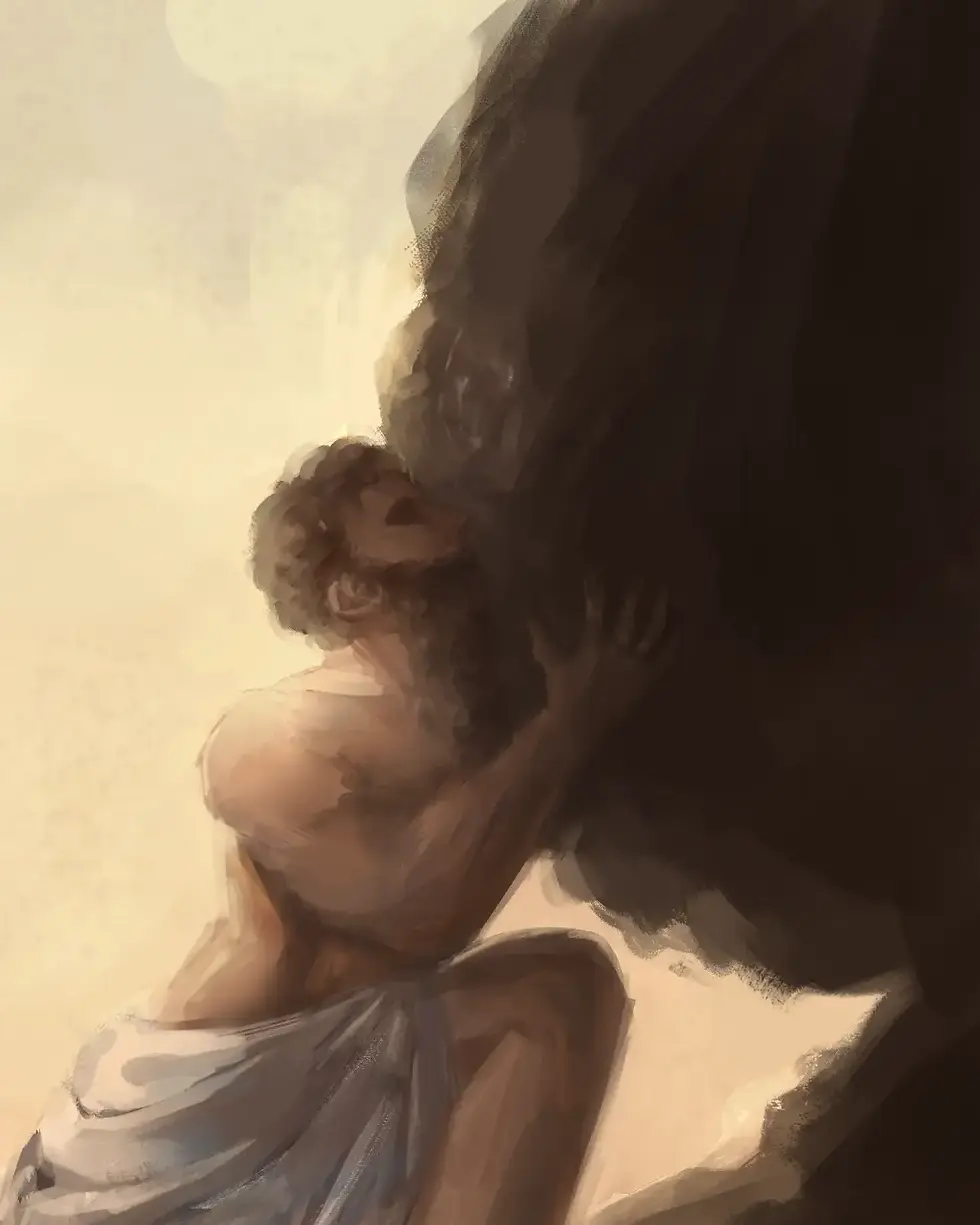
Sisyphus was the first king of Ephyra, now known as Corinth. According to legend, he chained up Thanatos (Death) so that no one could die. Eventually, Ares intervened, and Sisyphus had to submit. He then told his wife not to perform the usual sacrifices or bury his body. Upon reaching the underworld, he was allowed to return to punish her for this omission, but instead, he lived to an old age in the mortal realm before dying once again. For his defiance, he was condemned to the task of rolling a boulder up a hill only to have it roll back down every time it neared the top.
First, we should take into account his conditions and how they relate to our own lives. Being forced to do the same back-breaking work over and over, knowing that no amount of effort can change the outcome, is a cruel situation to be put in. Likewise, we all have our own boulders to push. We pursue relationships, degrees, careers and achievements. Within our lives, many of these rocks will inevitably fall back down. And after some time, inescapably, we will start to roll them back up all over again. So what’s the point of anything if everything we do will eventually fall back down and meet its eventual demise?
Sisyphus, after realizing time and time again that the rock will tumble back down, would likely learn to give up due to a past of misery and futility. Just like Tantalus (eternally hungry and thirsty) and Ixion (eternally spinning on a wheel of fire), he was thought to be utterly miserable. One must imagine Sisyphus depressed.
Not according to the French philosopher Albert Camus.
Absurdism is the philosophical theory that the universe is meaningless. Camus believed that there was a conflict between what we want to find in the universe (meaning, reason, answers and logic) and what we actually find (chaos and randomness). In order to cope with this, we continually resist acceptance by running from reality. However, we can only run for so long before we are forced to bear witness to the vast randomness of the universe and reconcile it with our own insignificance. No longer able to ignore the absurdity of existence, we must embody it and live with the pain of that knowledge every single day.
One must recognize that meaning isn’t found at the top of the mountain, and there’s no point in trying to get there. Instead of being fixated on what we want in life and what we get, we can choose to free ourselves and let go of our endless quest for meaning, reason, answers and logic. If nothing matters, then we get to decide what matters.
Sisyphus should be happy, not because he was delusional or stupid, but because he was fully conscious of his situation. The happiness of Sisyphus is what we call serenity. The state of being calm and untroubled; acceptance in which one feels okay regardless of external circumstances. What has happened, has happened, but what will happen next is never guaranteed. And in that freedom, Sisyphus finds peace.