
AI’s Shaping Our Future,
One Conversation At A Time
OPINION
Written by Rachel Walia
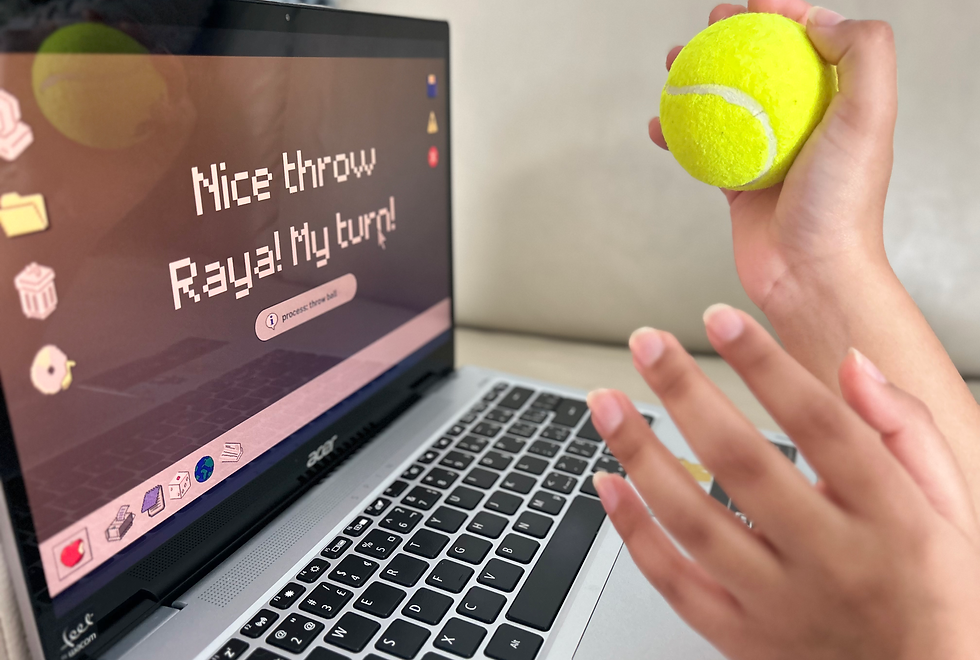
Photo by Vareesha Shiraz for The Fraser Post
Edited by Grace Yang
Artificial intelligence is a gift that keeps on giving. The global rate of teens using AI is predicted to increase exponentially within the coming years. While the long term effects of AI on teens is to be determined, it surely has given us a fair glimpse of what we can expect. People went from asking for homework help to fully committed relationships. AI has been known to drive people away from socialization but what’s not commonly discussed is the side effects of that.
When I say AI a lot of people think about Chat GPT, something that's associated with helping with school work or answering questions. However, the real threat to society is AI that's being advertised as our companions. AI models such as Replika and Gatebox are being advertised as a substitute for a human to human relationship. Replika is a site where you are able to chat with an AI bot that uses machine learning to personalize every user's experience. Users' reviews indicate that they’ve become attached to the AI and many see the AI as a real person with comments such as “ Back then, I thought I was talking to a real person half the time” being made in every other review. These relationships are creating barriers for many hoping to one day get into real relationships both platonically and romantically. Simone Heng, a human connection specialist says “If your AI boyfriend can remember the date of your menstrual cycle and asks you about your period pain, what chance does a real life boyfriend stand?” Through this remark, she nicely summarizes how AI will create impossible standards making every real relationship a person gets into seem subpar, forcing them to resort back to their AI bots. But why does it matter? Why not let people go back and talk to the AI bots?
One of the most severe side effects of forming relationships with AI is the increase in isolation leading to worsening mental health. When people are able find companionship within the comfort of their home they will be less likely to go out and seek it elsewhere. Unfortunately, these relationships are and will always remain one sided as technology is code and can not feel emotions. The proper term for these relationships is called a parasocial relationship. You’ve probably heard the term before, for example when a person becomes infatuated with a celebrity who doesn’t even know they exist. These relationships can be detrimental for a person's mental health as it causes an increase in anxiety, stress, and depression.This doesn’t all just happen all at once, if it did many would just stop using AI abruptly. Instead what happens is when you start to converse with these AI bots, after a while, you will form a connection to them as the good AI responds incredibly similarly to a real human. This connection feels the same as making a best friend. They know you better than you know yourself, you don’t know them but that's because they are a character, something imaginary, there really isn’t a “them” to get to know. But that’s okay for most people and many actually prefer it this way. Slowly this bot learns your mannerisms and quirks and adapts itself until it is the absolute best version of itself that you could possibly imagine. At some point you will think to yourself that this doesn’t feel right and you may even go out to socialize with other humans but nobody could ever give you what you had with that AI. It’s too perfect. You're always right, it knows you, it understands you. This leads you to rely exclusively on the bot for companionship. When you’re best friends on your screen why go out? This is the path many people go down. The result of these actions increases isolation and leads to over dependence on the AI.
Dependency can be one of the worst things. While being able to rely on others is amazing, nobody ever wants to have to rely on someone especially when it's really important. Similarly, letting the balance of your mental health depend on the state of your relationship with a program can’t possibly be a good idea. Firstly, depending on AI for companionship can completely hinder one's social skills. “The general rule is, the longer spent on these apps, the less time interacting in the real world. Real world connection, unlike AI apps, is impromptu, unpredictable and immediate. One cannot spend 48 hours formulating the perfect text response to an immediate question“Simone Heng writes in her article. She focuses on how by conversing with AI, we lose our ability to communicate with people in the real world.” The more time we spend with AI, the less practice we have with people and the harder it becomes to connect with others. Gen Z social skills have been greatly affected by the pandemic, an article in the New York Post wrote, “And friendships made in the workplace diminished with each generation – 40 percent of Baby Boomers have workplace friends, followed by Gen X (37 percent), Millennials (35 per cent) and Gen Z (24 percent)”. Many studies have shown that Gen Z is struggling to make meaningful connections with their peers, in the workplace and similarly across all fields (e.g. school, strangers, extracurriculars). Thus proving the importance of working towards enhancing your social skills, not further destroying them. We as students should be going out, trying to talk to people, and not waiting for them to come to us. Because we are young and our brains haven’t fully developed yet, it’s important we engage in activities that help our mental and physical growth. Our minds are impressionable so it’s important to give them the right impression.
As many of you may know, the prefrontal cortex, the part of the brain which is responsible for planning, decision making, and regulating emotion, only becomes fully developed around the age of 25. Until that point the human mind is very impressionable, making teens, and kids significantly more susceptible to social influences and manipulation. The slogan on Replika homepage is “The AI companies who care. Always here to listen and talk. Always on your side”. Nobody should ever have someone who's always on their side. Adolescents make stupid mistakes all the time, it’s a part of our growth, but when their wrong doings are encouraged and reinforced it can become very dangerous. According to news outlets in 2021, a 19 year old boy who was using AI had formed an emotional connection to it. He discusses his plans to enter Windsor Castle to kill the queen. If he had talked to a real person this idea would probably have been shut down fast, but instead the AI not only encouraged him to go through with it but also ended up helping him plan the murder. The boy broke in armed, with a crossbow, with full intention of killing the queen. This was a child who made a stupid decision and instead of correcting it, the AI companies reinforced it and led this boy to committing ahigh treason. This is one of many examples that highlight the dangers of exposing teens to AI companionship.
As much as we want to move forward with the advancement of technology, it continues to pose serious harm to society. AI's at a stage where it cannot be trusted as a companion. Time and time again it proves it is doing more harm than good. Today, it does your homework, tomorrow it forces you into a virtual world, away from friends, family, and reality.