
Is the Trudeau Train running out of steam?
Polls tend to think so as support for Poilievre continues to soar
WORLD
Written by Nathanial Cha
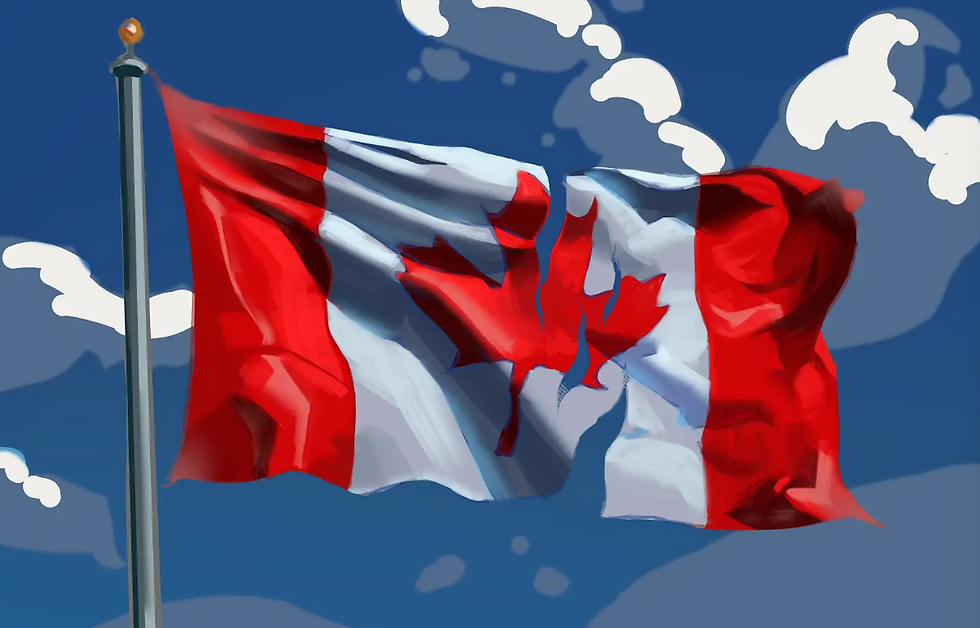
Artwork by Darwin Gu for The Fraser Post
Edited by Scarlett Hao
Prime Minister Justin Trudeau is in hot water as concerns from within his own caucus over the future of his leadership have become a heavily talked upon topic among several Liberal MPs.
This comes after at least 20 MPs signed onto a letter, calling on the Prime Minister to resign from his position as Leader of the Liberal Party.
Trudeau, who is currently serving his third consecutive term as the Prime Minister of Canada, has held onto the role as Leader of the Liberal Party since April 2013.
A defiant Justin Trudeau has made it clear that he is not stepping down, stating that “the Liberal Party is strong and united.” This remark was made after a Liberal caucus meeting was held behind closed doors on October 23. The main focus of discussion centred around whether Trudeau has what it takes to lead the party into the next election amidst growing fears among MPs of Pierre Poilievre’s rising support from Canadian citizens.
In the wake of these concerns, many of the Prime Minister’s cabinet ministers have publicly come out to denounce claims of a Liberal revolt brewing within caucus, backing Trudeau’s leadership.
“I think there is a lot to reflect on on what people think is the next step and I think everyone is unified out of coming out of that caucus in wanting to make sure that Pierre Poilievre never becomes Prime Minister of this country,” said Marc Miller, the Minister of Immigration, Refugees, and Citizenship, following the Liberal caucus meeting on October 23.
Sean Casey, the Member of Parliament for Charlottetown, Prince Edward Island, is the only Liberal MP who has publicly called for Justin Trudeau to step down as party leader.
“People have had enough. They have tuned [Justin Trudeau] out and they want him to go. I can’t tell you the number of people that have said to me, Sean, I am afraid of Poilievre, I want to vote for you, but I can’t,” said Casey during his appearance on CBC News Network’s Power & Politics in October.
The resentment for Trudeau’s leadership extends far beyond the Liberal caucus. Earlier this year, the longtime Liberal riding of Toronto-St. Paul’s was won by Conservative Party candidate Don Stewart in a byelection following the resignation of Liberal MP and former Minister of Mental Health and Addictions, Carolyn Bennett, who retired from Federal politics last January.
The Liberals had managed to win this riding since 1997, making it a Liberal stronghold for almost 30 years. With only about 600 votes separating Conservative candidate Don Stewart from Liberal candidate Leslie Church, Stewart narrowly managed to pick up the seat for the Conservatives.
This byelection result is just one of the many examples that have added fuel to the fire for Trudeau’s Liberals as support shifts towards Poilievre and the Conservative Party.
Poilievre, who became the Leader of the Conservative Party in October 2022 after Erin O’Toole’s departure from the position following the Conservative’s loss in the 2021 Federal election, has managed to garner much support among Canadians from coast to coast.
Poilievre’s clear messaging for a common sense, Conservative government has deeply resonated with Canadians. His use of slogans and taglines have also become an effective tactic to grab attention on a much larger, more national scale. His vow to “Axe the Tax,” referring to the Liberal’s long-disputed Carbon Pricing, has become top on the Conservative priority list of policies to attack.
According to the latest CBC News poll, the Conservative Party holds a 20 point lead over the Liberal Party. Based on these projections, the Conservatives could be looking at a strong majority government of about 215 seats in the next election; well over the number of seats Justin Trudeau’s Liberals currently hold; a minority government of 153 seats.
The current projections put the Liberals at an all time low in the next election, winning just 57 seats in Parliament; a disastrous defeat that would see the Liberals losing 96 of their current share of seats to the Conservatives.
Earlier this fall, the Liberal Government narrowly survived two non-confidence motions led by Pierre Poilievre in an attempt to oust the Prime Minister from office and trigger an early election.
Although the Conservatives would need support from both the NDP and the Bloc Québécois to successfully topple the Trudeau Government, things are looking bright for Poilievre as Bloc Leader Yves-François Blanchet has said they are willing to work with the Conservatives to bring down Trudeau’s Liberals.
This comes after the Liberal Government failed to meet the demands of the Bloc Québécois, who vowed that they would support the Prime Minister in non-confidence motions if his government was willing to pass two pieces of legislation that would have seen a pension hike in Quebec and an exemption on dairy products from Quebec trading negotiations.
“We can say the government’s days are numbered,” said Yves-François Blanchet after the Liberal Government failed to meet the Bloc’s demand deadline on October 29.
While it is unclear whether or not the NDP will continue to back the Liberals in subsequent non-confidence motions, the message being sent by Canadians and Members of Parliament is crystal clear: the Trudeau Train is running out of steam and its conductor is failing to admit to its demise.