
Into the Hurricane:
How Climate Change Amplifies Natural Disasters
WORLD
Written by Suvali Mukherjee
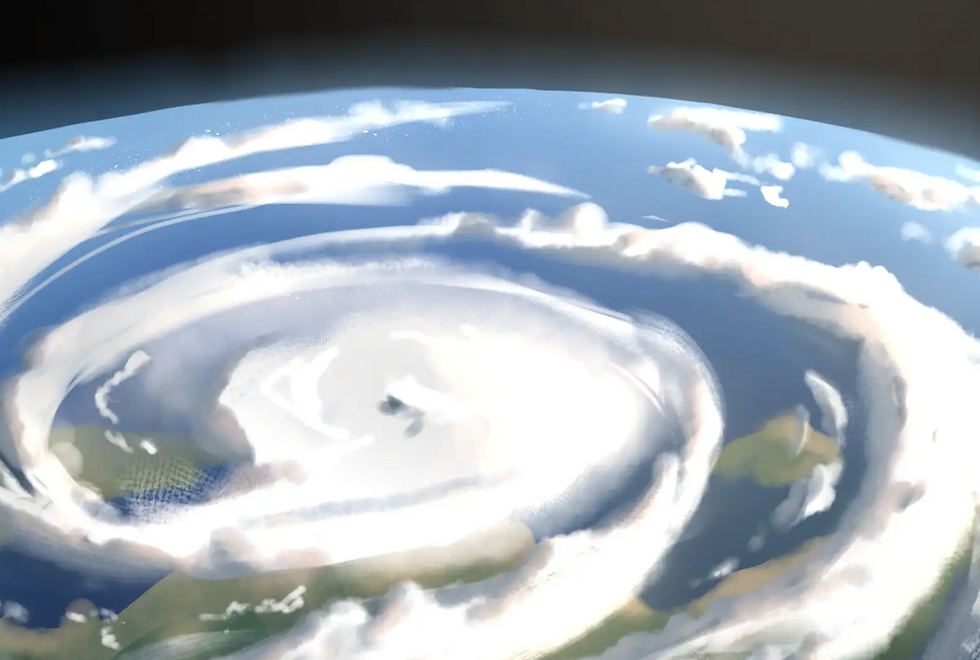
Artwork by Jessy Xu for The Fraser Post
Edited by Sahasra Siddabhaktuni
This year it was hurricane Milton and hurricane Helene in Florida. Last year it was the outbreak of forest fires hitting western Canada. The year before, tens of thousands died globally, due to tropical storms, floods and droughts.
We can ignore it as much as we want, but the facts are inevitable; climate change is increasing the intensity of many natural disasters. Rising global temperatures are affecting weather patterns, causing fires to burn longer and hurricanes to hit harder than before. People around the globe are suffering the consequences of these extreme weather events. If recovery is already costing economies so much, what will it look like next year when these disasters only get worse? What about the year after that?
A clear example of these effects was the devastations caused by hurricanes in Florida this year. Florida and many of its neighboring states were hit with two incredibly intense hurricanes back to back. Hurricane Helene, the first, was unexpected and went farther inland than most other storms. Bringing power outages, flash floods and storm surges with it. People barely had any time to recover before they were hit by another storm. Hurricane Milton left millions without power and caused tornadoes to pop up across the state. Both hurricanes left massive destruction in their wake and hundreds of people missing. However, this wasn’t what all the storms had in common.
Both hurricanes were unexpectedly intense and climate change is the reason why. Climate change means warmer ocean temperatures and this is exactly what fuels hurricanes. Hurricanes form when warm ocean water evaporates, rises and cools to form storm clouds, which are spun by the wind to create hurricanes. Higher ocean temperatures also increase moisture in the atmosphere, intensifying rainfall. Therefore, as ocean temperatures rise so does the frequency and intensity of hurricanes.
While hurricanes paint a clear picture of climate change's effects, they aren’t the only type of extreme weather growing in frequency. Record high temperatures across the world are contributing to many other natural disasters. For example, for the majority of this year, more than half of Brazil was gripped by the worst drought on record. Meanwhile, Afghanistan and Pakistan have been victims to an onslaught of heavy rains and flash floods since March; the flooding is estimated to have killed over a thousand people this year alone.
Natural disasters like these are expensive ordeals. The costs on the path to recovery go beyond the damages and reconstruction. Governments need to take into consideration costs of providing food, water and electricity among other necessities, as well as funding emergency services and temporarily housing displaced people. The aftermath of extreme weather also disrupts industries and many businesses, which negatively affects the economy.
Countries struggle to cope with these seemingly endless costs of natural disasters. On average natural disasters cost the global economy over 200 billion US dollars annually. Now, with global warming in the picture this number has nowhere to go but up.
As sea levels rise due to climate change, the costs of extreme weather escalate as well. The rising expenses will put immense pressure on national economies, especially in many developing countries.
If they haven’t already, soon the effects of these disasters will reach you. As Greta Thunberg said, “I want you to act as if your house is on fire. Because it is.” Climate change is all around us. If we don’t do something now, we won’t realize the consequences until the next hurricane Milton has taken your home away with it.